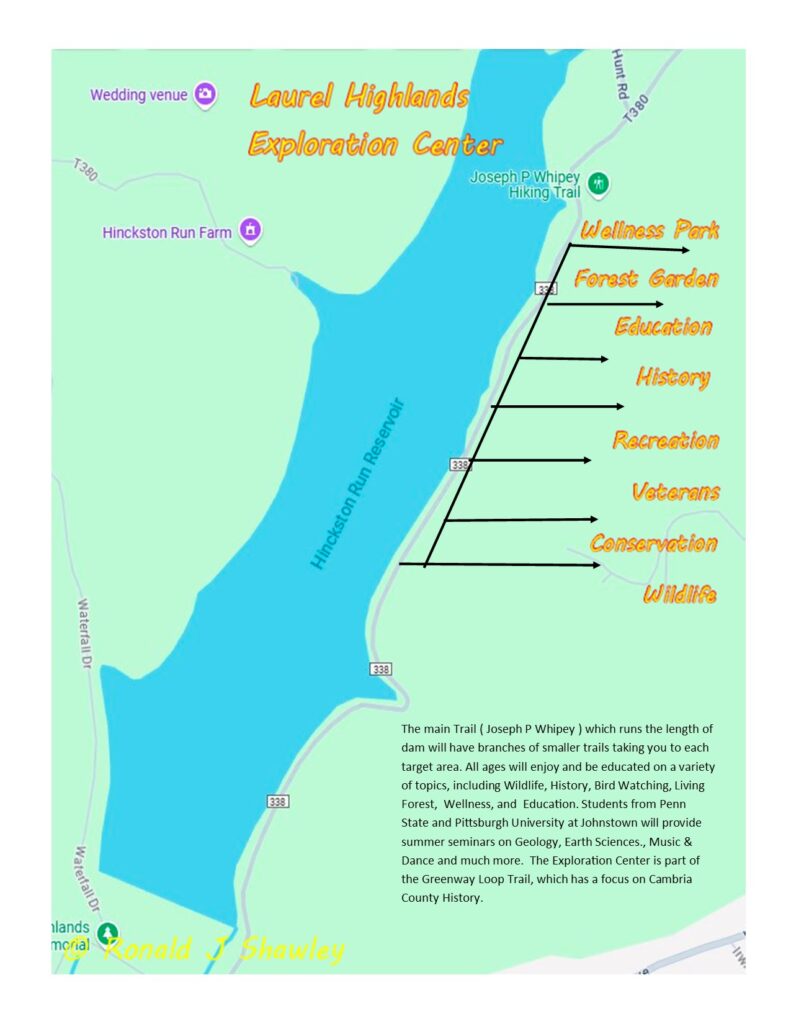
Laurel Highlands Exploration Center 
A collaboration that started more than 15 years ago has become a go to destination for families.
It started with a vision to build a one-of-a-kind recreational retreat, just to the north of Johnstown. Over the years, Cambria & Somerset Water Authority and Laurel Highlands Historical Village have been working together to enhance the Hinckston Run Reservoir, natural area. Located at the end of Honan Ave Hiking and Biking Trail, we find the LHHV Forest, which includes various trails. They provide families & individuals overlooks, historical landmarks, a picnic pavilion, wildlife, a huge waterfall, and now the Laurel Highlands Exploration Center. During your visit also keep in mind, persons are not allowed in the creek or waterfall, absolutely no entry permitted.
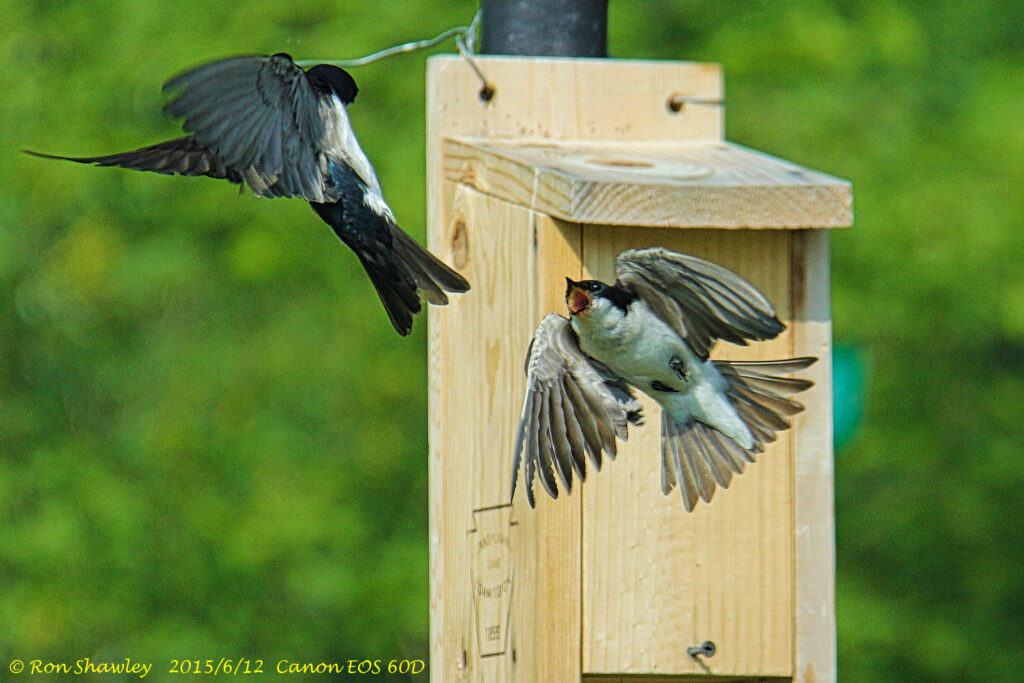
Today the Laurel Highlands Exploration Center includes the Laurel Highlands Veterans Memorial, hiking trails including the Joseph P. Whipey Trail, Eagle Trail and LHHV’s newest trail, the Laurel Highlands Greenway Loop Trail a 16 mile loop from Johnstown to Hinckston to Mineral Point and back to Johnstown. As you walk the trails you will see an abundance of wildlife, including many song birds, including bluebirds, and cardinals. In the past 5 years, we can see American Bald Eagles, hunting for food on the back side of reservoir. LHHV started installing Bluebird nesting boxes, and other feeder stations. The houses are provided by the Pa Game Commission.
The Laurel Highlands Veterans Memorial was built at the breast of the dam, allowing visitors to rest and remember all veterans. Throughout the year many veterans visit the site, as they themselves fight off the demons, caused by PTSD. One veteran stated “This place is so peaceful. I can relax and find comfort in watching the wildlife.” Memorial tags of veterans for all wars and conflicts can be seen on adjoining posts. If you know a veteran who would like to be noted at the memorial, please contact LHHV office 814 241 6123.
LHHV during the summer months conducts Nature & Conservation seminars, with the help of area colleges. The nonprofit group also has after school programs, including photography, Astro Photography, astronomy, earth sciences, civil war, and history of the region. LHHV has also had Native American Dancers, providing a full day of dance and history. They have also had mini concerts at the pavilion, showcasing mountain music of the region from the early 1600’s. LHHV has also had various Civil War Reenactments. LHHV with the cooperation of sate agencies, county agencies, schools, and local business leaders LHHV is building on the Joseph p Whipey trail area the Laurel Highlands Exploration Center.. Once completed it will enhance, educate, and provide a place for mediation.
Click the link below to watch video about Hinckston Run Dam
Laurel Highlands Exploration Center
Station Narrative
History – Native Americans 
- Long before European settlers arrived, the valleys and ridges around present-day Johnstown, Pennsylvania were home to Native American peoples. The region lay at a crossroads of travel and trade routes used by the Shawnee, Lenape (Delaware), and later the Iroquois Confederacy. These groups relied on the rivers for fishing, hunting, and transportation, while practicing small-scale farming of corn, beans, and squash. Trails through the mountains connected their villages to wider networks stretching from the Ohio Valley to the Susquehanna River. Their presence shaped the cultural and natural landscape that modern visitors still experience along the trails today.
History – Colonial Settlement 
- In the 1700s, settlers began moving into the valleys and ridges around present-day Johnstown, Pennsylvania. Drawn by rich forests, fertile land, and rivers for travel, families built small farms and cabins. The region became a frontier community where people worked hard to clear land, grow crops, and trade with nearby settlements. Trails first used by Native Americans were widened into roads that connected the area to larger towns. These early beginnings laid the foundation for the growth of Johnstown into a busy center of industry and community life.
History – Industrial Development 
- In the 1800s, Johnstown grew quickly as an important center for iron and steel making. The rivers and railroads made it easy to bring in coal and iron ore and ship out finished products. Thousands of people came to work in the mills, building homes and neighborhoods around the factories. The city became known for its hard-working spirit and strong steel that helped build America’s bridges, railroads, and skyscrapers. Even today, the story of Johnstown’s steel industry is remembered as a key part of the region’s history.
History – Recovery/Current 
- Today, Johnstown is a community that continues to grow and change while honoring its history. Old factories and mills have been turned into museums, businesses, and community spaces. Families and visitors enjoy parks, trails, and festivals that celebrate local culture. Schools, hospitals, and small businesses provide jobs and opportunities for the people who live here. Just like in the past, Johnstown remains a place where hard work, resilience, and community spirit shape everyday life
Environment – Microbiome 
- The Johnstown area is part of the temperate deciduous forest biome, which means it has four seasons with warm summers, cold winters, and plenty of rainfall. The hills and valleys are covered with trees like oak, maple, and hemlock that lose their leaves each fall. Many animals make their homes here, including deer, black bears, turkeys, and songbirds. Rivers and streams provide fresh water and support fish, turtles, and other wildlife. This rich natural environment has supported people, plants, and animals for thousands of years
Environment – Flora 
- The forests around Johnstown are full of many kinds of plants and trees. Tall oak, maple, and hemlock trees grow on the hills, while ferns, wildflowers, and shrubs cover the forest floor. In spring, colorful flowers like trillium and bloodroot bloom, adding beauty to the woods. These plants provide food and shelter for birds, insects, and other animals that live here. Walking along the trail, you can see how the plants help make the forest a healthy home for all living things.
- The forests around Johnstown are full of lots of different plants and trees. Big trees like oak, maple, and hemlock grow tall on the hills, while ferns, wildflowers, and bushes cover the ground. In the spring, flowers like trillium and bloodroot pop up and add bright colors to the forest. These plants give food and homes to birds, bugs, and other animals. As you walk the trail, see if you can spot plants that are helping make the forest a safe and healthy home!
Environment – Fauna 

- The forests and rivers around Johnstown are home to many animals. White-tailed deer, black bears, and wild turkeys roam the woods, while birds like woodpeckers and owls live in the trees. Rivers and streams are filled with fish, turtles, and frogs. Insects like butterflies and bees help the plants grow and bloom. Walking along the trail, you might see or hear some of the same animals that have called this area home for hundreds of years.
Environment – Remediation/Preservation 

- Over the years, the land and rivers around Johnstown were affected by industry and floods, so people began working to clean and restore them. Local groups and volunteers plant trees, clean streams, and protect habitats to help nature recover. Parks, trails, and green spaces have been created so people can enjoy the outdoors while protecting wildlife. Efforts to reduce pollution and manage stormwater help keep rivers and forests healthy. Today, the community continues to care for the land so future generations can explore and enjoy the natural beauty of the area.
Service – Health care 
- Health care professionals in the Johnstown region work hard to keep the community healthy and safe. Doctors, nurses, and therapists care for patients in hospitals, clinics, and homes. They teach people how to stay well, prevent sickness, and manage injuries or illnesses. Many also volunteer their time to help in schools, community centers, and local events. Their dedication makes the Johnstown region a stronger, healthier place for everyone who lives and visits here.
Service – Education 
- Teachers, librarians, and school staff in the Johnstown region work every day to help children and adults learn and grow. They teach reading, math, science, and life skills while encouraging curiosity and creativity. Many also volunteer their time in after-school programs, community events, and local clubs. Their guidance helps students become confident, caring, and skilled members of the community. Thanks to their hard work, education in the Johnstown region strengthens the area and prepares future generations for success.
Service – Military 
- People from the Johnstown region have long served in the military to protect their country and help communities at home and abroad. Soldiers, sailors, airmen, and Marines from the area have worked to keep freedom and safety for everyone. Many also volunteer in local programs, helping veterans, families, and disaster relief efforts. Their training and skills benefit not only the military but the community as well. The dedication of these service members makes Johnstown proud and inspires future generations.
Service – Emergency Services 
- Firefighters, police officers, and paramedics in the Johnstown region work every day to keep the community safe. They respond to fires, accidents, medical emergencies, and other urgent situations. Many also volunteer their time to teach safety lessons, help with community events, and support neighbors in need. Their quick action and dedication protect lives and property throughout the area. Thanks to their service, the Johnstown region is a safer and stronger place for everyone who lives and visits here.
Wellness – Physical 
- Staying active is important for keeping your body strong and healthy. Walking, running, biking, and playing sports help improve your heart, muscles, and energy. Eating nutritious foods, drinking plenty of water, and getting enough sleep also support your wellness. Trails, parks, and recreation programs give everyone a place to move, play, and stay active. By making healthy choices and staying active each day, you can feel better, have more energy, and enjoy life to the fullest.
Wellness – Mental 
- Taking care of your mind is just as important as taking care of your body. Activities like reading, drawing, spending time in nature, and talking with friends or family help reduce stress and improve mood. Mindfulness, deep breathing, and getting enough sleep also support mental wellness. Trails, parks, and quiet spaces give people a chance to relax, think, and enjoy the outdoors. By practicing healthy habits for your mind, you can feel happier, calmer, and ready to enjoy each day.
Wellness – Spiritual 
- Taking care of your spirit helps you feel peaceful, connected, and balanced. Spending time in nature, reflecting quietly, meditating, or praying can support spiritual wellness. Acts of kindness, helping others, and being part of a community also nurture your spirit. Trails, parks, and quiet places give people a chance to pause, breathe, and feel connected to the world around them. By practicing habits that feed your spirit, you can feel calmer, happier, and more connected each day.
Wellness – Metacognition
- Metacognition is thinking about your own thinking and learning. It helps you understand how you solve problems, make decisions, and remember information. By noticing what strategies work best for you, you can plan, adjust, and improve how you learn and handle challenges. Using metacognition in daily life can make school, work, and personal projects easier and more successful. When you practice thinking about your thinking, you become more aware, confident, and able to reach your goals.
Wellness – Philosophy
- Throughout history, many philosophers have asked big questions about life, knowledge, and how we should live. Socrates, Plato, and Aristotle in ancient Greece explored ideas about truth, justice, and wisdom. Later thinkers like Confucius in China and Immanuel Kant in Europe helped shape morals, ethics, and how people understand the world. Philosophers encourage us to think deeply, question our beliefs, and learn from different perspectives. By studying their ideas, we can better understand ourselves, others, and the world around us.
Wellness Labyrinth
- A wellness labyrinth is a winding path that people walk slowly, often in quiet reflection or meditation. Unlike a maze, a labyrinth has a single path that leads to the center and back out again. Walking it can help reduce stress, improve focus, and give time to think or relax. Many people use labyrinths to feel calmer, gain clarity, or connect with their thoughts and feelings. By walking a labyrinth, you can enjoy a peaceful, mindful experience that supports both your body and mind.